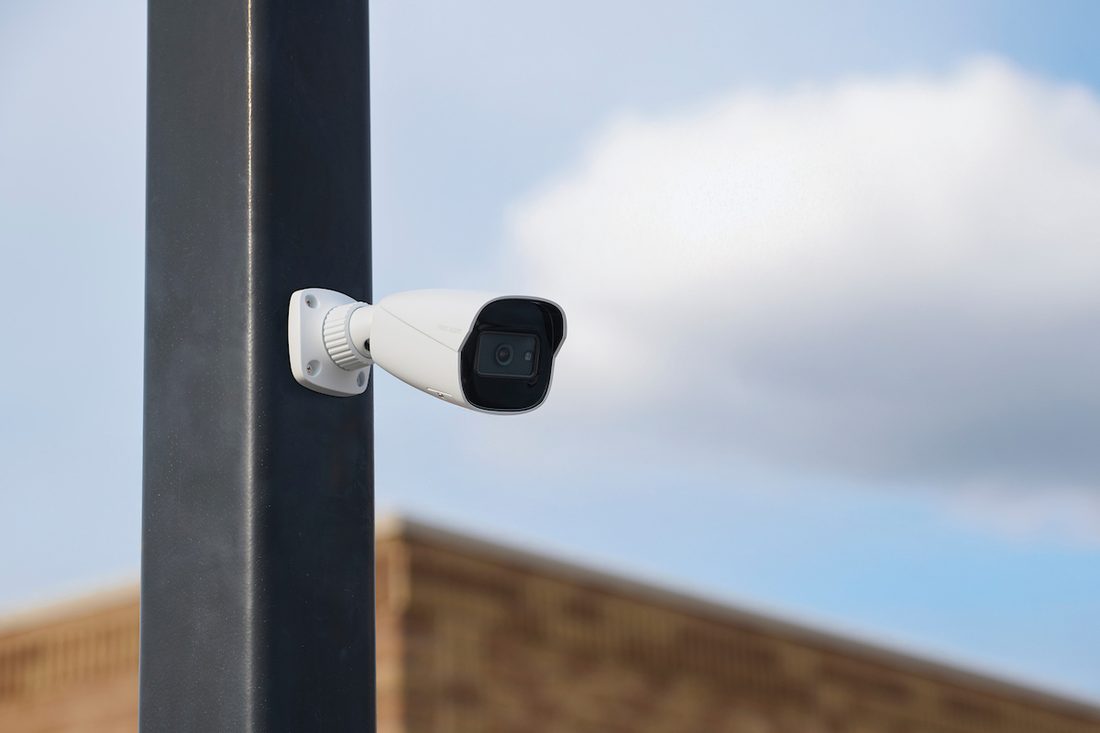
Cameras
VX or CX — and what the recording actually costs.
There are two camera families on the First Alert line and one difference that
decides everything else about them. This page is that difference, and the prices that follow
from it.
A VX camera has a free app. A CX camera does not. That is the whole of it. Every VX
records seven days for nothing on the
First Alert app — a real app, from
Resideo, and not the same thing as Total Connect 2.0. No CX can use it at all, so a recording
plan is part of what a CX costs. Everything below follows from that one line.
The two families, side by side
Neither is “better”. A VX is the cheaper way to cover a door or a
driveway and costs nothing a month if you can live with seven days and no package alerts. A CX is
four times the pixels and the one to put where you will one day need to read a plate or a face.
The four cameras, with the specification
Prices are installed, one time. Every figure below is off Resideo's own datasheet for that
part — the same sheets are on the literature section if
you want the originals.
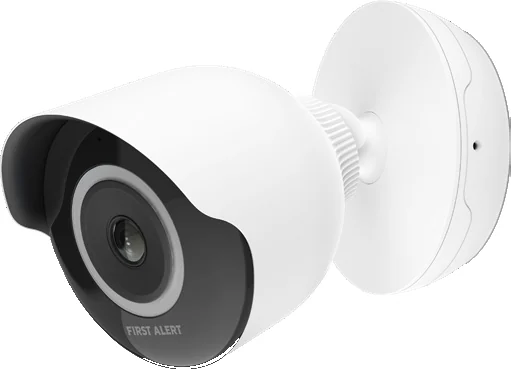
VX3 outdoor camera
$350 installed · CAMWE-WO
The everyday outdoor camera. Free recording, a spotlight and a siren.
- 2MP Full HD, 1920×1080, with WDR
- 147° diagonal field of view
- IR night vision to 10 m, plus colour night vision
- Spotlight and a 93 dBA siren you can set off from the app
- Two-way audio
- People, packages, vehicles and animals told apart
- Ethernet or dual-band Wi-Fi — and if the cable drops it moves to Wi-Fi on
its own so recording carries on
- PoE (802.3af) or 12 V DC
- −40 °C to 50 °C, IP66
- Backbox ($49) — somewhere for the wire to sit when there is nothing
behind the camera to take it, such as a concrete wall
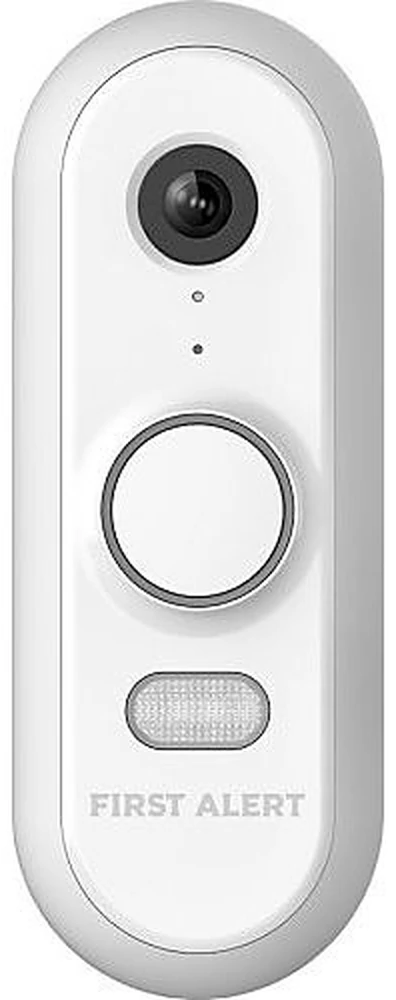
VX1 video doorbell
$339 installed · CAMW-WDB
The sharpest sensor on either platform, at the front door.
- 5MP, 2592×1944, with WDR
- 180° diagonal, with three fields of view to pick from so it suits a
narrow porch or a wide one
- IR night vision to 7 m, colour night vision to 3 m
- Spotlight and siren
- Two-way audio, 93 dBA speaker
- People, vehicles, animals, packages and loud sounds
- Runs off your existing 16–24 V AC doorbell transformer; rings a
mechanical or a digital chime
- Dual-band Wi-Fi, IP65
- Comes with white and grey trim rings in the box — pick the one that suits the door
- Works to −40 °C. Full features, including the wired chime, are
rated to −20 °C — see the note below
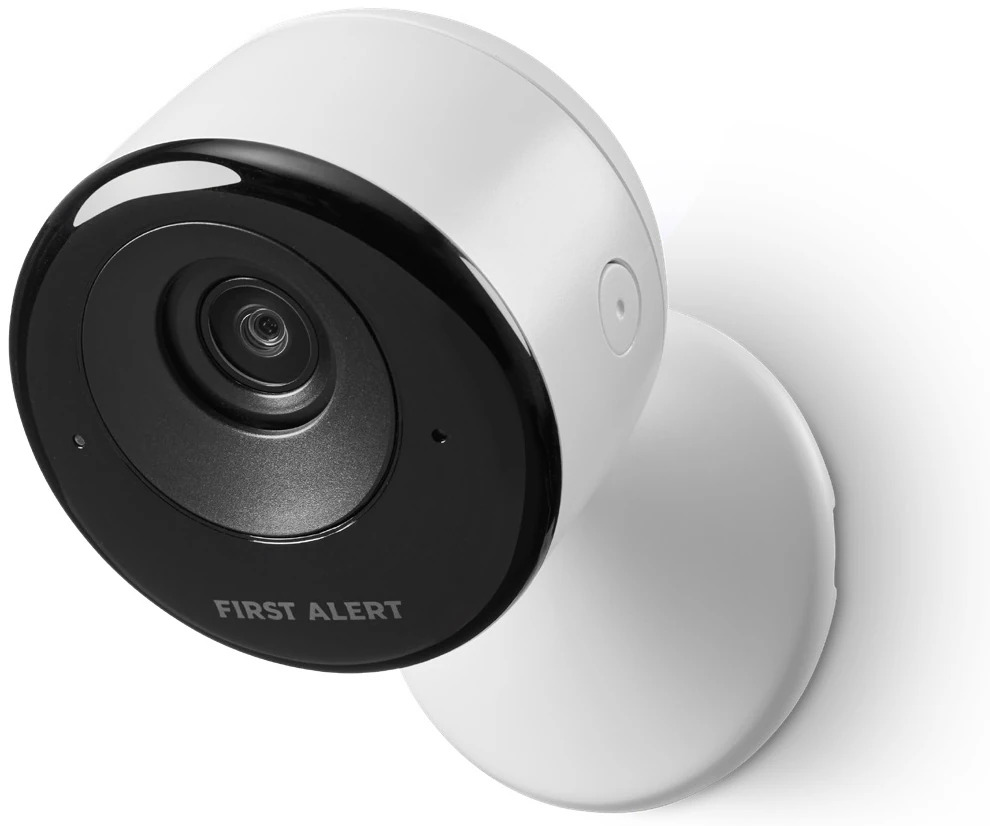
VX5 indoor camera
Priced on request CAMW-WI
The inside one, with a shutter that physically closes over the lens.
- 2MP with WDR, 1080p video
- Night vision
- A real privacy shutter — it closes over the lens, and you can close it
from the camera, the app or the alarm panel
- Privacy Mode, automated
- Two-way audio
- People, pets, vehicles and sounds told apart
- Dual-band Wi-Fi, straight to your network — no hub
- Sits on a shelf, or mounts on a wall or ceiling
- Streams on a PROA7PLUS panel and the PROWLTOUCH keypad
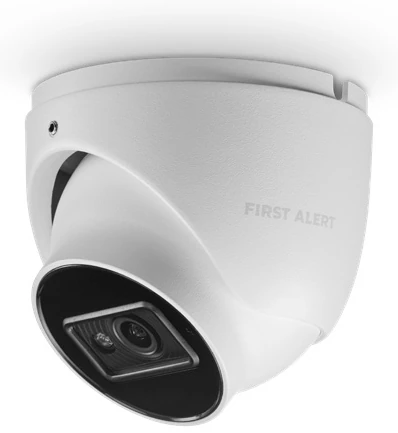
CX4 turret camera
$529 installed · CX4TE08F28PW
A ball in a cup: aims almost anywhere, sits tight to a soffit or ceiling.
- 8MP with WDR — four times the pixels of a VX3
- 2.8 mm fixed lens — the wide one, for a yard or a driveway
- Intelligent detection: people, packages, vehicles, animals
- Records to a card in the camera — microSDXC up to 1 TB, 24/7, as
well as clips in the cloud (card not included)
- IR night vision
- −30 °C to 60 °C
- Wired. No free app — a recording plan is part of what it costs
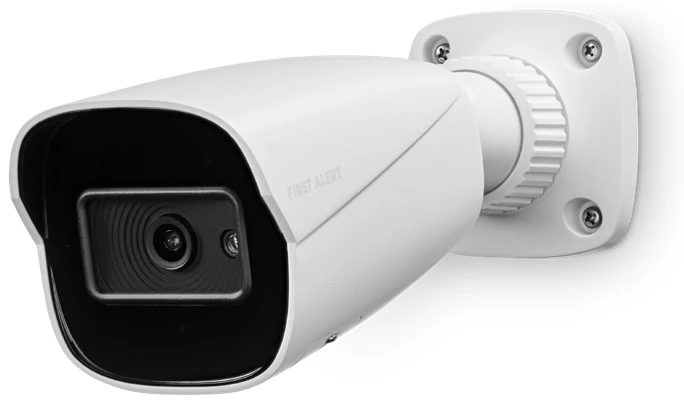
CX4 bullet camera
$559 installed · CX4BE08F28PW
The long one on an arm — obvious from the street, which is half of
what a camera is for.
- The same 8MP sensor, 2.8 mm fixed lens and detection as the turret
- The better choice where it has to reach out from a wall rather than sit flat
- Same edge recording to a card, same cloud clips
- −30 °C to 60 °C
- Wired. No free app
The doorbell and an Ottawa January. The VX1 itself works down to
−40 °C. What is rated only to −20 °C is the full feature set, and
that includes ringing your wired chime — so on the coldest week of the year you may get
the phone alert and not the ding in the hallway. We will say on the visit whether your door is
the exposed kind.
The VX5 indoor camera is new to our line. It is the same family as the VX3 outside —
same app, same plans, same detection — with a shutter that physically closes over the lens
and can be shut from the alarm panel as well as the phone. We are pricing it now; ask and we will
quote it with the rest of the job.
One app, and it is Total Connect 2.0. There is no separate First Alert app to install
— the cameras, the doorbell, the panel, the lights and the locks are all in the one place,
which is the point of running them on this line rather than on four different accounts.
The app guide is
here, and the
VX
Series brochure is Resideo’s own on the cameras.
Spec for spec
Before you rely on this page. The specifications and prices here come from the
manufacturer’s own literature and from our own cost list, and both change — and we
can get something wrong.
Nothing on this site is a quote. We confirm every detail on the
visit and in writing before anything is ordered, and if there is an error here we correct it and
re-quote rather than hold you to it.
Where this site might be wrong →
What recording costs
Every one of these covers the whole system, not each camera — adding a second camera to a
plan does not add a second charge until you pass what the plan holds.
Cameras of any kind need the Smart Security package or better — the
Security package has no app at all, so there is nowhere for a camera to appear.
The three packages are here.
What happens when you mix them
This is the part worth reading before the kit is decided, because it is the only place the
pricing does something people do not expect.
Put a CX on a system that had only VX cameras, and the free option goes. Not because we
take it away — because the CX cannot use the free app, so something has to carry it. From
that point the choice is one plan covering both kinds in one app, or two plans and two apps.
The honest arithmetic: CX on their own plan at $7 with the VX
cameras left on the free app is cheaper than $10 for both together. It is also two
apps for one house. About three dollars a month is what one app costs, and most people
pay it once they have opened the second app twice.
Past four VX or eight CX
One plan holds four VX cameras and eight CX. Past that it is a second plan rather than a
bigger one — five VX and a CX is two plans, not one dearer one. We stop at twelve cameras
on a house, which is three plans, and nobody has needed more.
If the count is climbing, there is one way back to a single plan: go all-VX. Twelve VX
cameras ride one plan at $19 a month, because the twelve-camera plan does not carry CX at all.
The CX cameras are what split the bill.
So which one
- A front door. The VX1 doorbell. It is wired off your existing chime transformer, it
is sharper than anything on the other platform, and it is free to record.
- A driveway, a back door, a yard. VX3 outdoor if seven days is enough and the budget
matters. CX4 bullet if you want to read a plate.
- A shop, a till, a loading door. CX4, every time. Eight megapixels and AI detection is
what makes footage useful to the police rather than just upsetting.
- Already have CX cameras and want a doorbell? Add the VX1 and move everything onto one
plan. The second app is not worth the three dollars you save.
Build a system with
cameras in it →